A comprehensive guide to the best crypto wallets: hardware, desktop, and mobile solutions. Wallets with multi-chain support, integrated DeFi, and NFT storage – the secrets to security and convenience.
In the digital world of 2026, wallets are no longer just e-wallets. They’re veritable Swiss Army knives for crypto: multichain, NFTs, DeFi—all at once! Like brave blockchain guardians, they securely hide your coins’ keys and disguise complex features in their interfaces as simple ones. We’ve analyzed reputable resources and compiled a selection of the year’s coolest non-custodial wallets. This article offers a glimpse into the latest trends and practical advice to help you choose your ideal crypto wallet.

🛡 Hardware wallets – a secure digital safe
This is where the true fortress of crypto security lies! Hardware wallets are devices that store keys offline , away from prying eyes. Ledger and Trezor have become synonymous with security: according to a review on the Crypto-Mining Blog, “Ledger devices are considered some of the most reliable cold storage solutions for storing crypto assets .” Using such a wallet, you have complete control over your private key—it remains inside the device, even when you connect to the internet. This means hacker attacks and phishing scams are far from overlooked.
What the leaders offer. The Ledger Nano X and Trezor Model T can store dozens of cryptocurrencies: Bitcoin, Ethereum, Litecoin, and many other tokens. Look at Ledger’s list of supported assets: “Bitcoin, Ethereum, Litecoin, Dash, Dash, GNT, REP, DCR…” and so on. Trezor, meanwhile, has set the tone since 2014: “information (keys) are generated and stored offline ,” protecting your funds from online threats. Furthermore, both Ledger and Trezor integrate with software wallets (such as mobile or browser-based ones) for convenience: for example, Exodus and MetaMask can work with hardware wallets.
- Non-custodial : your keys are stored solely with you. No registration, KYC, or intermediaries required.
- Multichain : These devices support thousands of coins on different blockchains. Ledger is “wireless,” even using Bluetooth, while Trezor uses a secure USB port.
- Security : The PIN and recovery phrase (seed) on your device are your personal safe. As Crazy-Mining writes, “the app is lightweight and doesn’t take up much space, and keys are never shared with third parties.”
A hardware wallet is a must-have for anyone storing significant amounts of money long-term. Yes, it may be an extra device on the shelf, but it’s worth it.
💻 Desktop and online wallets: convenience and simplicity
If you value convenience, desktop and browser-based apps are a great choice. The wallet is almost always free and easy to install, and your keys remain secure. The key is to understand that they’re hot (connected to the internet), meaning they’re slightly more vulnerable than cold hardware. However, the biggest benefit is access speed and functionality .
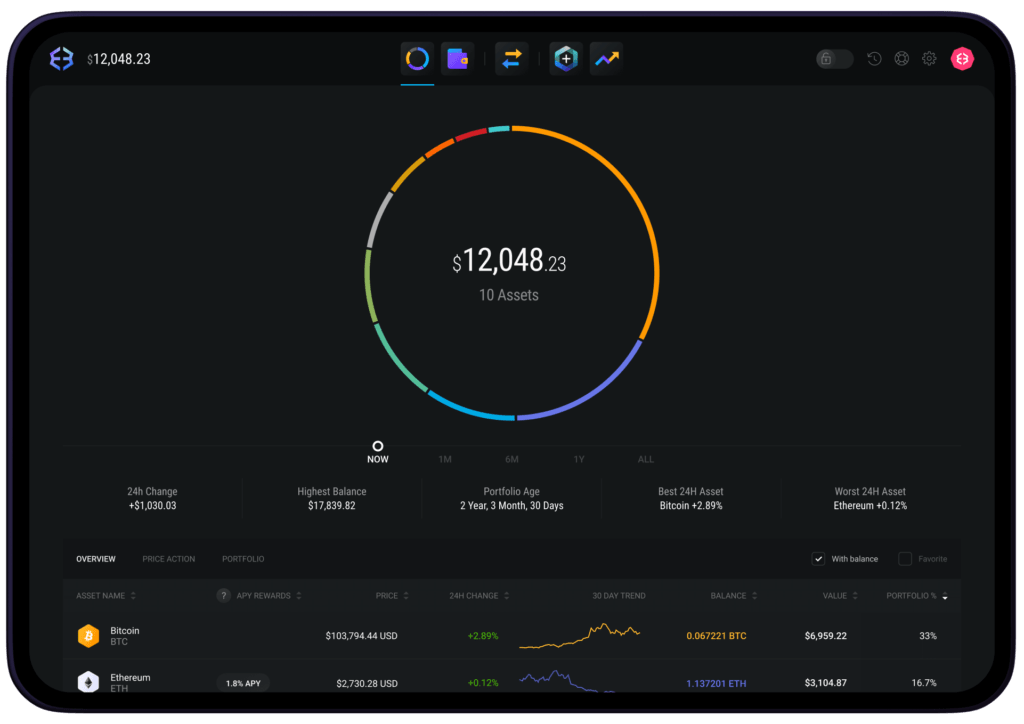
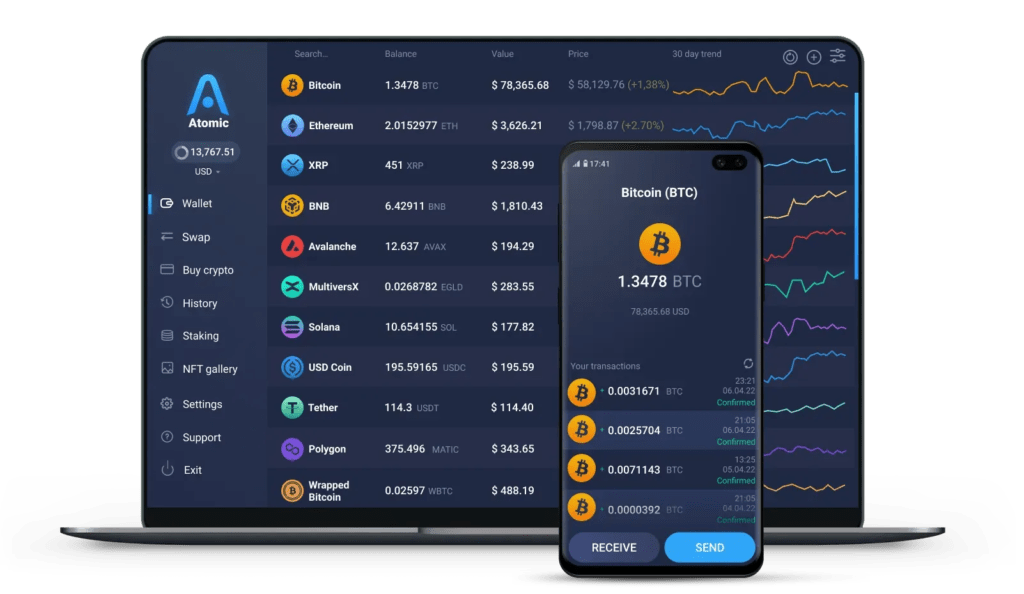
Well-known names. Let’s recall Exodus , the legendary multi-coin desktop and mobile wallet. According to Binance Square, Exodus supports 260+ cryptocurrencies and even integrates with Trezor hardware wallets. It offers a user-friendly interface, a built-in exchanger, and portfolio tracking—all in one app. Another example is Atomic Wallet , which the author of DTF describes as an excellent option for those who “want quick access to their assets.” Atomic is very similar to Exodus: multi-chain, with atomic swaps between currencies and the ability to store NFTs.
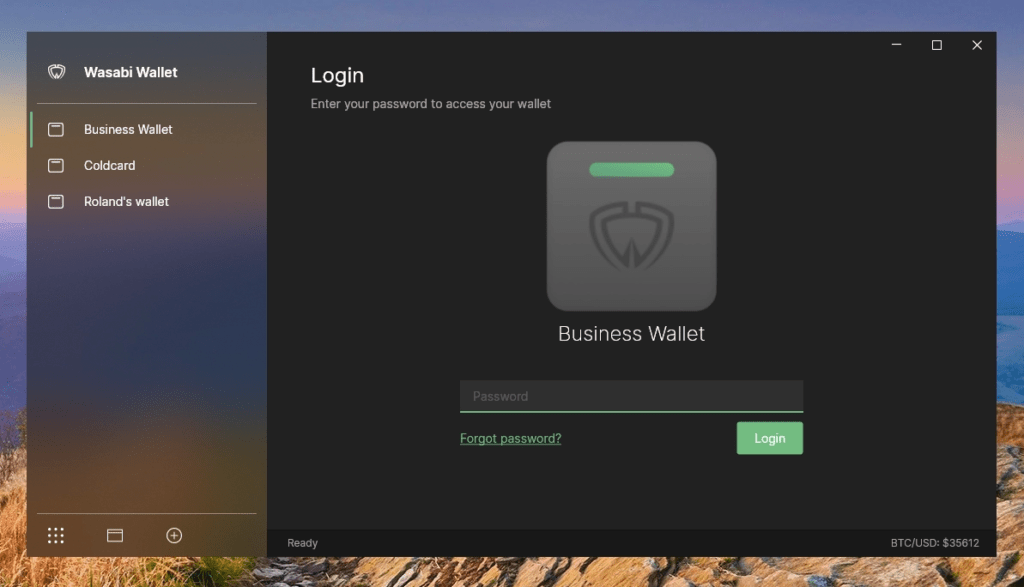
Privacy. One of the desktop’s unusual stars is Wasabi (for Bitcoin). It’s not just a wallet, but an “anonymous wallet with CoinJoin.” CoinJoin is a cool feature for privacy lovers: it mixes transactions from different people so no one can track your transfers. Wasabi is its own server, and you own all the keys. As puts it : “You get complete control over your bitcoins… with Wasabi, you can send them to someone else without needing permission.” Awesome for privacy paranoids!
- Token management : programs support EVM tokens (ERC-20, etc.) and often NFTs.
- Internal swaps : internal exchanges and connection to DEX/DEX via services. For example, Exodus has an exchange button, and Atomic has Atomic Swaps.
- Customizable fees : You can often manually select the transaction speed. In Electrum (another desktop classic), flexible fees are “an important parameter for many users.”
- Integrations : Most popular wallets can be linked to hardware wallets and other services (Ledger, Trezor, blockchain services).
But don’t forget: keep a backup copy of your phrase, update your software, and connect via HTTPS. Then a “hot” wallet will provide all the convenience without the disasters.
📱 Mobile wallets – a crypto home in your pocket
Mobile apps are a must-have for everyday crypto life. Imagine you’re on the bus, and instead of reaching for your wallet, you simply launch an app. Trust Wallet, MetaMask, Coinomi—these names are familiar. And yes, they’re all non-custodial : private keys are stored directly on your smartphone (it’s been verified: “all data is stored on the user’s device, ensuring maximum security” ). This means you’re the only one in control of your funds, not someone else.
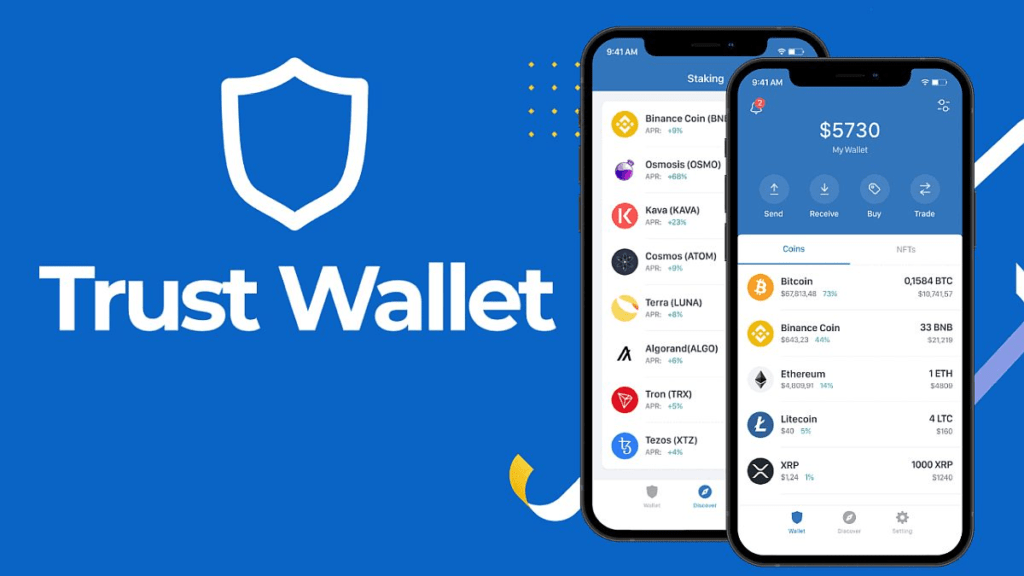
Trust Wallet is a particularly striking example: “a multifunctional wallet that not only allows you to store various cryptocurrencies but also easily manage them.” Trust Wallet can exchange tokens, participate in staking, and interact with DApps, with all keys securely stored in your phone’s internal storage . It supports Bitcoin, Ethereum, Binance Coin, and hundreds of ERC-20 tokens. What’s more, Trust lets you buy crypto directly with a bank card, which is often a lifesaver for beginners. There’s no KYC—just set your PIN or biometrics and you’re good to go.
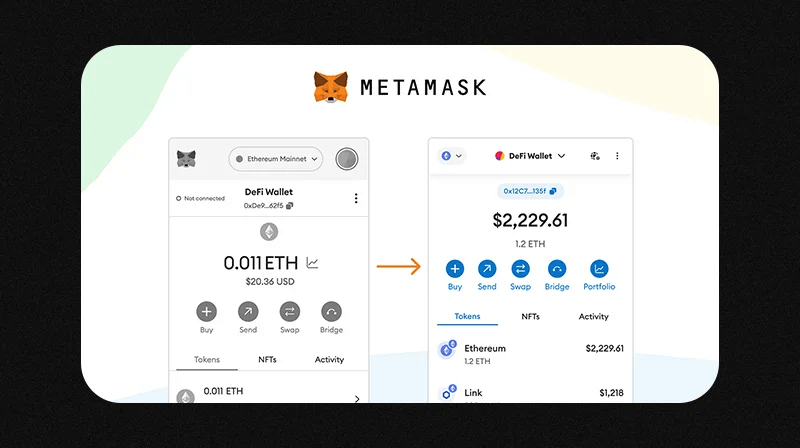
MetaMask is the king of the mobile decentralized world, despite starting out as a browser extension. It allows you to bypass exchange buttons and directly access DeFi or NFT marketplaces. As Binance notes, “MetaMask is a popular decentralized wallet that runs in both browsers and smartphones. It allows you to interact with the Ethereum network and a variety of dApps .” In other words, MetaMask is your bridge to Web3: with it, trading on decentralized exchanges or browsing NFT collections takes place right on your phone.
- Multiple blockchain support : Many mobile wallets (Trust, Coinbase Wallet, Math Wallet, etc.) support multiple blockchains at once – Ethereum, BNB Smart Chain, Solana, and others.
- NFT graphics : Some wallets allow you to view your NFT collections in your dashboard. Trust and Coinbase Wallet already display token images.
- DeFi integration : Instant swaps through built-in DEXs (e.g., one-click to exchange tokens) and connections to staking or lending services.
Of course, a mobile wallet is also a risk: if you lose your phone, you could lose everything. Don’t be lazy: enable a PIN code, biometrics, regularly back up your seed (sometimes even print it out!), and keep your iOS/Android device up to date.
🌐 Multichain, DeFi and NFT – all in one bottle
Three goals for 2026: multi-chain support, DeFi functionality, and NFT support. The best wallets are built around these ideas. Imagine a wallet that transfers tokens between different blockchains with a single click, provides access to decentralized exchanges, and simultaneously stores your collection of crypto art. This isn’t science fiction—it’s a modern wallet.
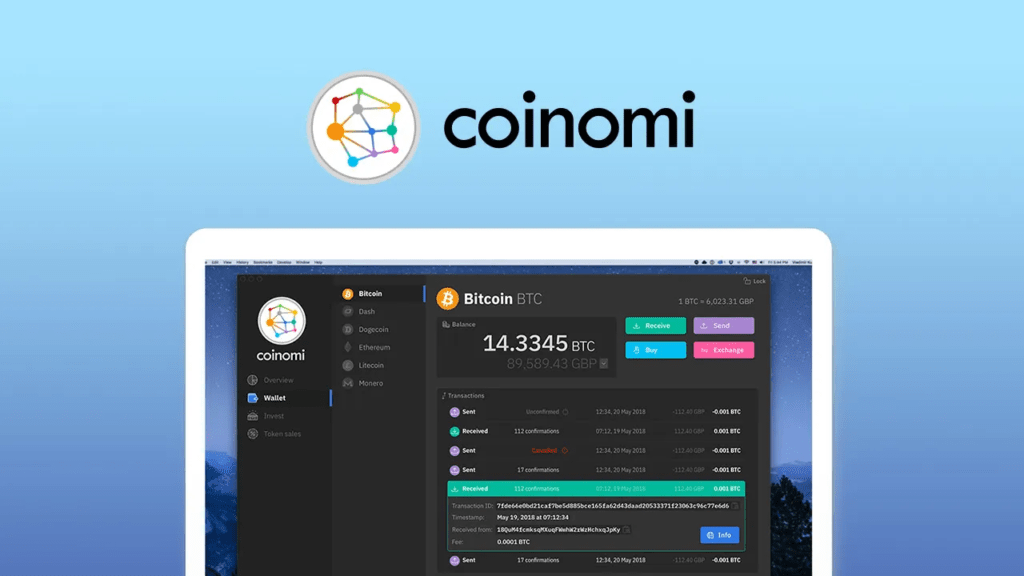
An example of multi-tasking. Coinomi and Exodus are prime examples of multi-chain behemoths: they “enable management of multiple assets in a single wallet” (as ImToken describes their service). Trust Wallet from Binance/Binance Smart Chain is also multi-chain: it can handle ETH, BNB, and thousands of tokens based on them. Coinbase Wallet covers both Ethereum and Solana, allowing you to store Solana and its NFTs while also trading on decentralized platforms.
DeFi features. All major mobile wallets already have built-in DeFi adapters: you can swipe a couple of tokens directly in the app or access Uniswap/Aave/Compound through the interface. For example, MetaMask does just that—it’s essentially your gateway to any EVM-based DeFi wallet. Trust Wallet lets you not only exchange tokens but also access the exchange with a single tap. And what about hardware wallets? Ledger Live (the Ledger app) now also supports DeFi connectivity: the Ledger desktop app now features a “built-in exchanger and interaction with decentralized applications.”
NFTs and Innovation. While a couple of years ago, wallets were simply a token repository, NFTs now thrive in them. Phantom (Solana wallet) and Rainbow (Ethereum wallet) position themselves as “wallets for collectors.” They beautifully display your NFTs, and transactions combine fees for tokens and tokenized images. But leaders like Trust and MetaMask are not far behind: they’re adding an asset gallery to make it easier to browse your NFTs right within the app. It seems like the wallet is becoming something of a “digital photo album” for your blockchain—and that’s pretty cool.
- NFT support : the good news is that all crypto wallets are gradually learning to display NFTs. You just need to store the token’s address, and the app will find its metadata and display the image.
- Tokenomics of the future : mobile wallets already allow you to participate in DAOs, vote (Governance), stake, and farm. This means you can literally access any DeFi project through your wallet.
- Secure multi-signature : For the largest amounts, there are solutions like Gnosis Safe (a cross-platform multi-signature wallet) – also a 2026 classic. It’s an Ethereum wallet that requires multiple “signatures” for a transaction. Stainless steel for large DAOs!
🗝 Control and freedom are the key to peace of mind
What do all our top wallets have in common? Complete control over your assets without annoying intermediaries. All of the solutions listed are non-custodial —the keys always remain with the user. This is the essence of decentralization. Remember: “all private keys are stored remotely from the server and are never shared with third parties” —that’s how Electrum works, but this rule also applies to MetaMask, Trust Wallet, Phantom, hardware wallets, and others.
Of course, with great freedom comes responsibility. Keep your seed phrase safe! Without it, a lost wallet cannot be recovered. All the best wallets offer simple backup tools: a 12-24-word seed phrase is your new best friend. And remember, most major developers are open-source projects with active communities. If something goes wrong, you’ll find support and answers online, not through a centralized service.
Personal experience
I started with a simple online wallet… and didn’t notice any difference until I learned about DeFi. All it took was logging into MetaMask and connecting to a DEX to experience freedom. When I was surprised to learn about CoinJoin in Wasabi, I realized a wallet could also be a privacy lifehack! I was even more impressed by the multi-wallet feature: tokens from Ethereum, BSC, and Solana—all at your fingertips in a single Trust Wallet. Unconventional features? They’re not uncommon anymore: for example, Phantom has a built-in exchange, and Exodus provides portfolio analysis and market news.
Let’s be honest, the wallet market is like a gadget race: new features and shiny interfaces are everywhere. We’ve only selected those that have stood the test of time and received community approval.
🎯 Conclusion
A crypto wallet in 2026 is your personal guardian and a versatile tool. It must be not only secure but also flexible : it must work with multiple networks and tokens simultaneously, and be compatible with NFTs and DeFi. Many of the wallets reviewed today offer all of these capabilities. Hardware wallets like Ledger and Trezor offer the highest level of security, mobile wallets like Trust and MetaMask offer instant access to your funds, and specialized wallets like Wasabi or Phantom address niche privacy and NFT needs.
When choosing a wallet, remember: you need complete control over your keys and a user-friendly interface. If something sounds too complicated, you can start with a simple Trust or Exodus and gradually master the new features. Don’t be too quick to trust someone else’s keys, even if they’re labeled “Exchange Wallet” – choose a non-custodial wallet and follow the security rules. And don’t forget: every wallet is like a bank, only in the virtual world, and your balance depends on your actions.
May 2026 bring you only profitable transactions, interesting NFTs, and exciting DeFi pools. And may a reliable wallet become your faithful companion in this exciting world of crypto!
Read more:
 Top Cold and Hot Crypto Wallets BTC/ETH/ETC/BCH/LTC/XMR/DOGE+
  Trust Wallet: A Review of the Popular Mobile Cryptocurrency Wallet
  metamask. Ethereum wallet guide and review
  JaxxWallet: Review, Installation, Download, and Use
  Mining Ethereum in on GPU and ASIC
  Litecoin Wallets: Best Wallets for Litecoin (LTC) [DOWNLOAD]
  BitPay Wallet for Windows: Download, Overview, Installation, Use