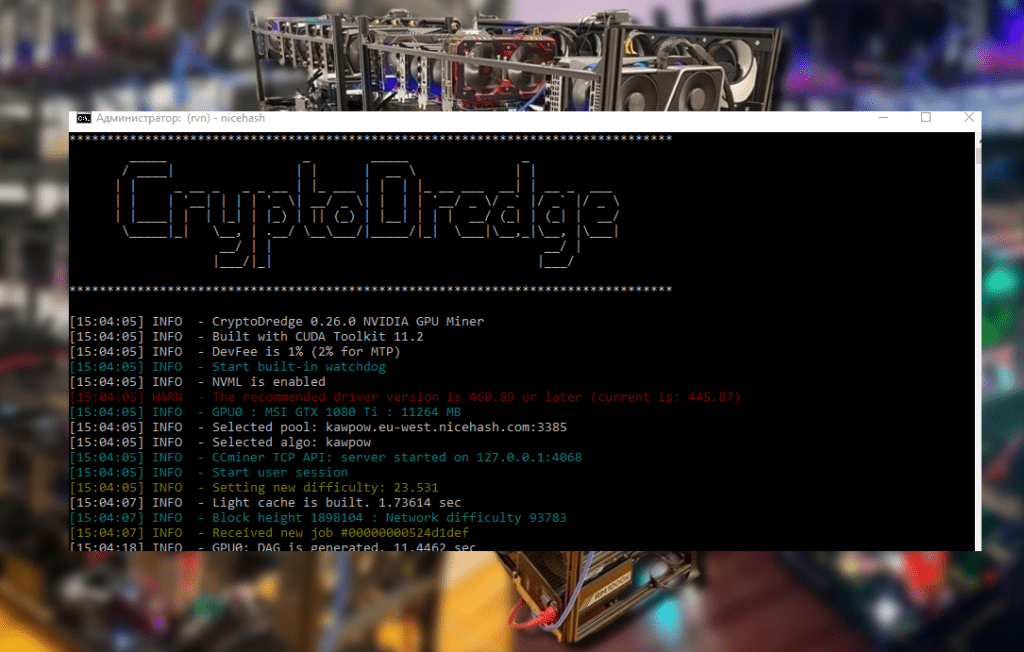
When graphics cards stopped being just graphics cards in the mid-2020s, even seasoned industry veterans scratched their heads. Lite Hash Rate , or LHR , was how NVIDIA decided to designate the forced limitation of the computing power of its flagship linear cards in an attempt to at least somewhat tame the cryptocurrency apocalypse. It seemed like just yesterday that RTX cards were freely mining Ether, but by the summer of 2021, the corporation announced that new batches of RTX 3080, 3070, and 3060 Ti would be shipped with a reduced hashrate. The manufacturer thus halved the speed of calculating the Ethash algorithm, and symbolic “Lite Hash Rate” stickers appeared on retail product descriptions.
Why did LHR even exist?
During the previous cryptocurrency bull run, graphics cards became scarce and prices skyrocketed. Nvidia explained that GeForce RTX cards were designed for gamers , not miners, so the hashrate reduction was intended to bring them back into gaming PCs. The limitation is implemented in the drivers and VBIOS, but most interestingly, some of the logic has been moved to the die itself . This is pointed out by Dell Community staff: the lock is built into the silicon and therefore “much harder to circumvent than previous attempts to limit hashrate.”
Nevertheless, the manufacturer has added a clear label: boxes containing LHR versions are labeled “Lite Hash Rate,” and this measure only applies to new cards ; previously purchased cards remain uncapped. According to a PC Gamer article, this limitation only applies to partner versions of the cards: Nvidia’s Founders Edition ships without the lock.
How does LHR affect mining?
Users noticed a drop in Ethereum mining performance by almost half . Tests by the 2Miners team confirmed that the RTX 3080 Ti’s hashrate dropped from ≈116 MH/s to ≈64 MH/s after just a few minutes of operation , meaning LHR reduced speed by approximately 45%. While there’s no difference in games—the limiter is only activated when the Dagger-Hashimoto algorithm is detected—this is a serious blow for coin miners. The Dell forum cited opinions that the hashrate lock affects any application that actively calculates hashes.
However, just a year after LHR’s introduction, enthusiasts began to devise workarounds. NiceHash QuickMiner and NBMiner soon received partial and full unlocks, and T-Rex proposed dual mining: 70% of the hashrate is allocated to the second coin and the remainder to Ethereum. The miners turned out to be more inventive than the marketers thought.
General mechanism of limitation
Here’s how it works in a nutshell (in simple terms for those who are far from programming):
- The driver detects the algorithm. The Ethereum cryptocurrency uses Ethash (Dagger-Hashimoto). When it detects it, the driver reduces the memory frequency and voltage to slow down computations.
- The GPU BIOS and microcode control limits. For the RTX 3080/3070/3060 Ti series, the new code immediately limits the blocks responsible for hash calculations.
- Unlocking is possible using software, but requires replacing drivers, or is only done partially (LHR v1 and v2 are easier to hack, v3 is almost impossible).
LHR Bypass Methods: Working Solutions
So, you’ve decided to mine and want to restore your card’s power? Below are the most common unlocking methods. Please note that everything described is done at your own risk; attempting to violate licensing restrictions may void your warranty and, in some countries, even lead to unpleasant questions from regulators.
NiceHash QuickMiner: First Full Unlock
According to a post on crypto-mining.blog, NiceHash QuickMiner version 0.5.4.0 is the first software to completely remove the LHR limitation from RTX 30 series v1/v2 cards. The developer recommends:
- Download QuickMiner v0.5.4.0 RC or later.
- Install NVIDIA driver no lower than 470.05 (preferably 472.xx).
- Launch the miner on Windows and connect to the NiceHash platform.
The program automatically configures overclocking and has a built-in watchdog, making it widely used. However, it doesn’t support LHR v3 (RTX 3050, 3080 12GB). It only works within the NiceHash ecosystem and requires Windows 10 x64, limiting its applicability.
lolMiner: 100% for LHR v1/v2, almost 90% for v3
Crazy-Mining.org published a note about the release of lolMiner 1.50, which fully unlocks LHR for v1 and v2 cards. For proper operation, you need a 510.x driver Linux or a 512.x driver for Windows ; the program requires superuser privileges and promises to unlock:
- LHR v1/v2 — 100% power ;
- LHR v3 – up to 90% (RTX 3050) and 92% (RTX 3080 12G) , but stability is not guaranteed; if problems arise, you can roll back to 65% unlocking.
An important detail: lolMiner’s commission for Ethash is only 0.7% , which is advantageous compared to other miners. Users note that unlocking occurs within about 30 seconds of launch.
NBMiner: 100% Unlock and LHR Modes
NBMiner v42.2 is marketed on cool-mining.org as a universal miner supporting Windows and Linux, which features 100% LHR unlocking for the Ethash algorithm . The developers have added a parameter --lhr-modethat allows you to select the unlocking mode:
--lhr-mode 1— classic mode, recommended for cards with power limitations.--lhr-mode 2— power-efficient mode for cards with GDDR6X (3070 Ti, 3080, 3080 Ti).
Note: Do not use drivers newer than 512.95 on Windows or 515.x on Linux , as unlocking will no longer work. Additionally, the program has a 1% devfee on Ethash and supports SSL, failover pooling, and other features for stable operation.
GMiner: Partial Unlock for RTX 3050
The developers of GMiner 2.78 added LHR unlocking support for the RTX 3050. The default limit for this model is 58% . The update improves performance on Ethash, but does not provide a full unlock. GMiner is designed for both NVIDIA and AMD platforms and is renowned for its stability and watchdog system. For other cards, lolMiner or NBMiner are better.
T-Rex and dual-mining
Some miners prefer T-Rex for its flexible approach to restrictions: the program allows mining two cryptocurrencies simultaneously, splitting its hashrate between them. According to NotebookCheck, T-Rex uses 70% of its hashrate for coins like Conflux, Ergo, or Ravencoin, and the remaining 30% for Ethereum. This allows for bypassing LHR locking and maximizing resource utilization, but requires sufficient video memory (at least 10 GB). This mode is unacceptable for the RTX 3060 Ti and 3070 with 8 GB of VRAM.
Ethical and legal nuances 🚨
It’s worth remembering: LHR is not a technical bug, but a deliberate defense against excessive mining . Nvidia’s blog emphasizes that the hashrate reduction is intended to help return the cards to gamers. Bypassing the block effectively violates the manufacturer’s goals, and some jurisdictions may view such actions as interference with licensed hardware. However, the legal landscape in the cryptocurrency space is still very unclear, and many users believe that the graphics card they purchased is their property and they have the right to dispose of it as they wish.
There is also an ethical aspect: the active use of bypasses could lead to further shortages and price increases, which will hurt ordinary players. Furthermore, miner developers warn that running third-party programs is a security risk: NiceHash emphasizes that most other miners do not disclose their source code and may contain malicious functions. Therefore, when choosing an unblocking tool, verify the source.
How is the video card market changing?
While Nvidia was integrating LHR into its chips, the crypto community found workarounds, and Ethereum switched to Proof-of-Stake, making GPU mining of ETH pointless. Therefore, in 2025–2026, many LHR cards returned to retail, and manufacturers lowered prices.
However, the release of new miners with full unlocking could stimulate short-term demand. NiceHash QuickMiner is known to restore up to 100 MH/s on the RTX 3080 Ti, making profitable mining—albeit on different algorithms—appealing again. Simultaneously, LHR v3 is appearing online, though unlocking them is still difficult, but lolMiner already offers an experimental mod with 90% unlocking.
The market is also reacting to the news that Nvidia has no plans to release LHR versions of the Founders Edition, meaning new restrictions will fall on the shoulders of partners. More complex blocking methods may be integrated in the future, but for now, mining is gradually losing relevance due to the transition of large networks to PoS.
Conclusion ✨
Lite Hash Rate is Nvidia’s attempt to restore balance to the graphics card market. The hashrate cap does reduce the cards’ appeal to miners, but enterprising developers quickly found ways to circumvent it. NiceHash QuickMiner , lolMiner , NBMiner , and even dual mining on T-Rex have paved the way for fully or partially unlocking LHR. However, using such tools carries legal and ethical risks, and the full return on investment in Proof-of-Stake mining is questionable.
If gaming and creativity are your goal, it might be better to accept LHR and simply enjoy the gaming performance. If you’re an enthusiast looking for maximum returns, carefully research miners, check drivers, and be mindful of security.
Read more:
 Best Miner for Ravencoin (RVN): T-Rex, GMiner or NBMiner?
  PhoenixMiner 5.1c: Download fastest Ethash miner with Low DevFee (Win/Linux)
  AwesomeMiner (Crack): Download CPU/GPU/ASIC/FPGA Miner for Windows/Linux
  PhoenixMiner v5.0e: Download Ethereum (Ethash) GPU miner for Windows & Linux.
  NBMiner v33.4 (NVIDIA & AMD GPU Miner for ETH, RVN, GRIN, BEAM)
  Mining Laws and Regulations in 2025: Russia, EU, and the US
  NiceHash QuickMiner (CPU & GPU): Download NoDevFee miner for Windows.