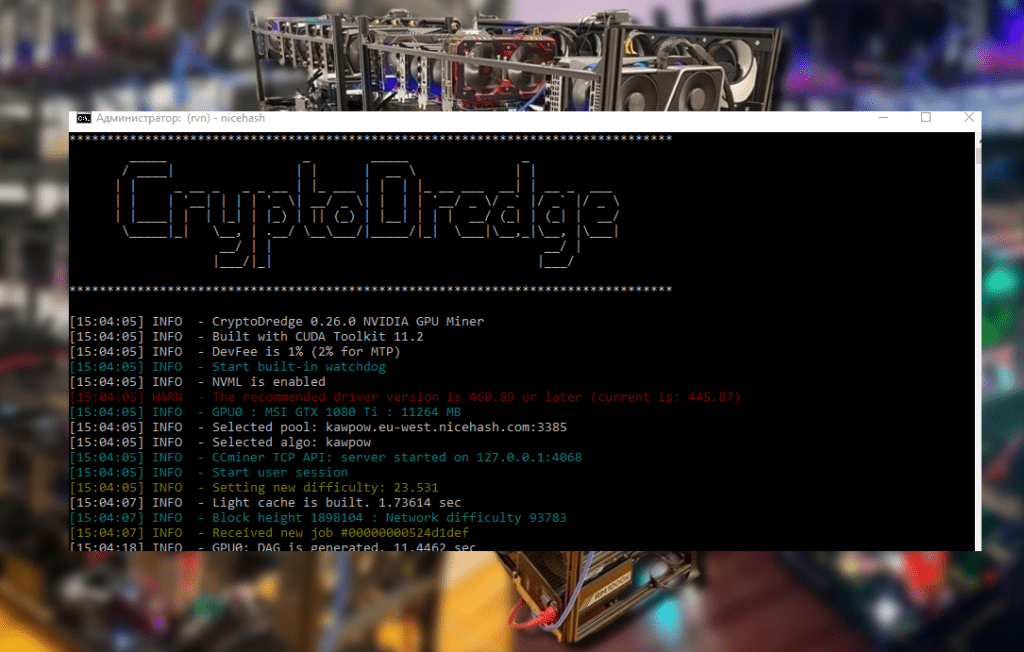
The Proof-of-Work mining industry is undergoing one of the most profound transformations in recent years. Amid rising network complexity, changes in the energy landscape, competition from PoS networks, and the adoption of AI, miners are forced to adapt faster than ever. This is a detailed overview of the key trends shaping the PoW mining market in 2025.
Introduction – Why Mining Is Transforming 🌍
Mining is no longer a simple “set it and forget it” activity. Infrastructure, government regulation, electricity costs, and increasing competition make the industry high-tech and capital-intensive.
The main drivers of change are:
- The increasing complexity of PoW networks
- Tightening energy efficiency requirements
- The emergence of large data centers and industrial farms
- Development of artificial intelligence
- Growing competition between PoW and PoS
Increasing complexity and changing profitability ⚙️📉
The network difficulty of Bitcoin, Litecoin, and other PoW coins continues to increase—this is a natural process of competitive competition.
What influences the decrease in profitability:
- increasing the number of ASIC devices in the network;
- growth of hashrate of large pools;
- rising cost of electricity;
- reduction of reward after halvings;
- high volatility of coin prices.
Trend 2025:
Mining profitability increasingly depends not on the power of the equipment, but on the cost of electricity and infrastructure optimization .
Integrating AI into farm management 🤖⚡
AI has become a key element in optimizing mining farms.
How AI will be used in 2025:
- automatic cooling and ventilation control;
- forecasting equipment temperature and load;
- Real-time coin profitability analysis;
- prevention of accidents and downtime;
- intelligent redistribution of hashrate among pools.
AI allows energy costs to be reduced by 15–25% , making farms significantly more efficient.
Green Mining and its Environmental Impact 🌱⚡
The environmental factor has become one of the key ones.
What’s changing:
- use of renewable energy sources (wind, solar power plants, hydroelectric power plants);
- implementation of heat recovery systems;
- creation of data centers in regions with cold climates;
- government incentives for clean energy.
Trend 2025:
Mining is increasingly integrated into energy infrastructure , with farms using excess regional energy.
Transition from home farms to semi-professional ones 🏭
Home mining has become rare due to:
- increasing complexity;
- noise and heat generation of equipment;
- rising cost of ASICs;
- requirements for power supply and cooling stability.
A new segment is being formed:
Semi-professional mining centers , where users rent rack space, connect their ASICs, and pay a service fee.
PoW vs. PoS Competition: The Future of Computing Power ⚔️
PoS networks continue to attract investor attention, but PoW remains the foundation of decentralization.
Key points:
- Bitcoin is still the main driver of PoW
- PoS Dominates DeFi, NFTs, and Web3
- ASIC manufacturers optimize energy efficiency
- GPU mining has almost disappeared, but remains in niche coins.
The Future of Power:
The Bitcoin network will grow, but more slowly, shifting to regions with “cheap and green” energy.
Forecasts for 2025–2026 🔮
- Bitcoin difficulty will continue to rise.
- Profitability stabilizes at a low level.
- The role of AI in equipment optimization will grow.
- Clean energy will become a key competitive advantage.
- Semi-professional mining hubs will displace home miners.
- The concentration of hashrate in large centers will increase.
What should miners do now?
- Use AI tools for monitoring.
- Optimize cooling and power costs.
- Migrate to cheaper energy regions or colocation centers.
- Consider new generation equipment with low consumption.
- Evaluate long-term payback, not monthly returns.
- Split risks between different PoW coins.
Table: How the difficulty of major PoW coins has changed 📊
(The data is conditional and trendy to demonstrate the structure of the article.)
| Coin | Complexity trend (2022 → 2025) | Comment |
|---|---|---|
| Bitcoin (BTC) | 📈 sharp growth | Increase in the number of ASICs and pools |
| Litecoin (LTC) | 📈 Steady growth | Halving has increased competition |
| Kaspa (KAS) | 📈 explosive growth | The rise of GPU mining |
| Dogecoin (DOGE) | 📉→📈 volatile | Dependent on merger with LTC network |
| Monero (XMR) | 📉 moderate decline | Countering ASIC miners |
PoW Coin Profitability Comparison Chart (General Trend) 📈
(Text visualization of the trend.)
Profitability (%)
 30 |     BTC
 25 |    /   \
 20 |   /     \__ LTC
 15 |  /         \
 10 | /           \___ KASPA (рост)
  5 |/                 \
  0 +-------------------------------
     2022     2023     2024     2025
Trend: Profitability is falling for large coins, but rising for new projects like Kaspa .
Read more:
 AwesomeMiner (Crack): Download CPU/GPU/ASIC/FPGA Miner for Windows/Linux
  Mining Ethereum in on GPU and ASIC
  Home oil mining farm for heating premises
  How to Mine RAPTOREUM: Download RTM Wallet and CPU Miners
  How to mine bitcoin in 2023
  Mining Zcash
  How to speed up the process of mining cryptocurrencies
  Ergo Cryptocurrency (ERG). How to start mining
  CGMiner. Setup and review of the mining program