Learn how to mine Dogecoin: how Scrypt differs from SHA-256, why ASIC miners beat GPUs, how merged mining with Litecoin works, and which wallets to choose for storing DOGE. This article debunks the myths and realities of DOGE mining and is suitable for both beginners and experienced crypto enthusiasts.
A conversation partner once exclaimed, “Do you know what memes and mining have in common? They can both seem funny until you understand the underlying logic.” My inner skeptic chuckled, but the topic turned out to be deeper. Dogecoin is a cryptocurrency born out of a joke that has become a serious financial instrument. Its technological foundation is the Scrypt algorithm , which ensures fast blocks (approximately one minute) and low fees. Its inflation model is based on a fixed reward— 10,000 DOGE per found block. This endless flow of new coins makes the network resilient, but it also increases hardware requirements.
Why Dogecoin Loves Memory
In the early days, Dogecoin and its “big brother,” Litecoin, began as “coins for the masses.” Litecoin developer Charlie Lee chose Scrypt precisely because the algorithm required a lot of RAM and theoretically protected it from the development of specialized chips. The process of calculating hashes requires storing large amounts of data and sequential reads and writes, so at first, graphics cards and even processors performed equally well. However, the market evolved: engineers found a way to adapt the architecture of ASIC devices to Scrypt, and the efficiency of specialized miners became unattainable for GPUs. As a result, home mining rigs using graphics cards gradually gave way to noisy and hot ASIC machines.
Merged mining and “classic” coins
The energy you spend finding a block can work for both. In 2014, Dogecoin gained support for merge mining , allowing you to mine Litecoin and Dogecoin simultaneously. Thanks to a shared blockchain, miners receive rewards from both networks using the same hashrate. As cool-mining.org points out, Dogecoin is a meme coin, but it can be mined alongside Litecoin; blocks are created every minute, and the reward is fixed at 10,000 DOGE. This combination makes Scrypt coins attractive to large pools and mining farms.
Who’s interested in Dogecoin today?
Think mining is for giant farms? According to , Dogecoin is one of the most popular PoW coins, and can be mined on the same devices as Litecoin. The community remains active, the price often correlates with Bitcoin, and merged mining increases efficiency. Yes, the coin was born out of memes and Elon Musk’s tweets, but it has long since moved beyond the realm of jokes.
GPU vs. ASIC: Who Wins?
What the official Dogecoin website says
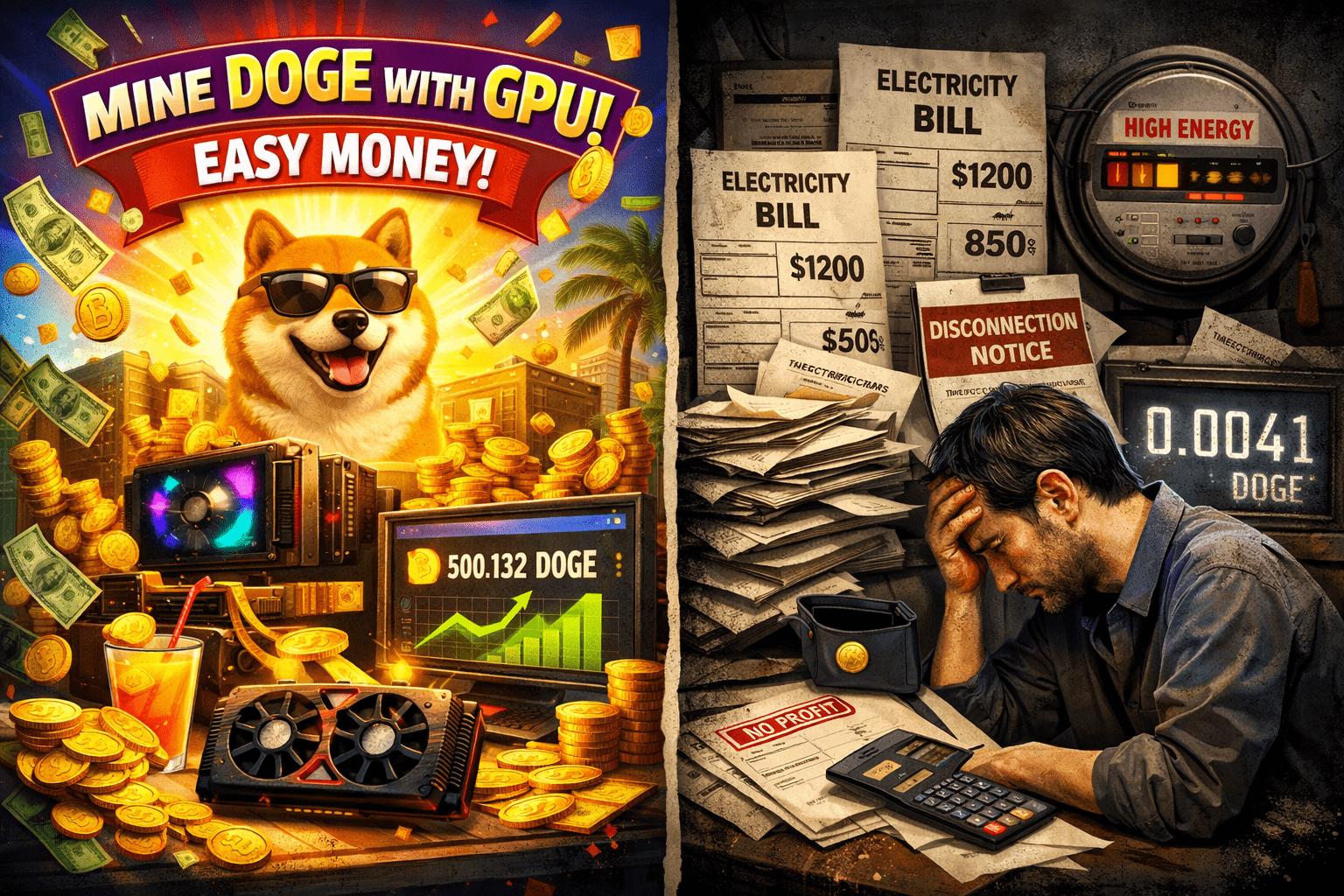
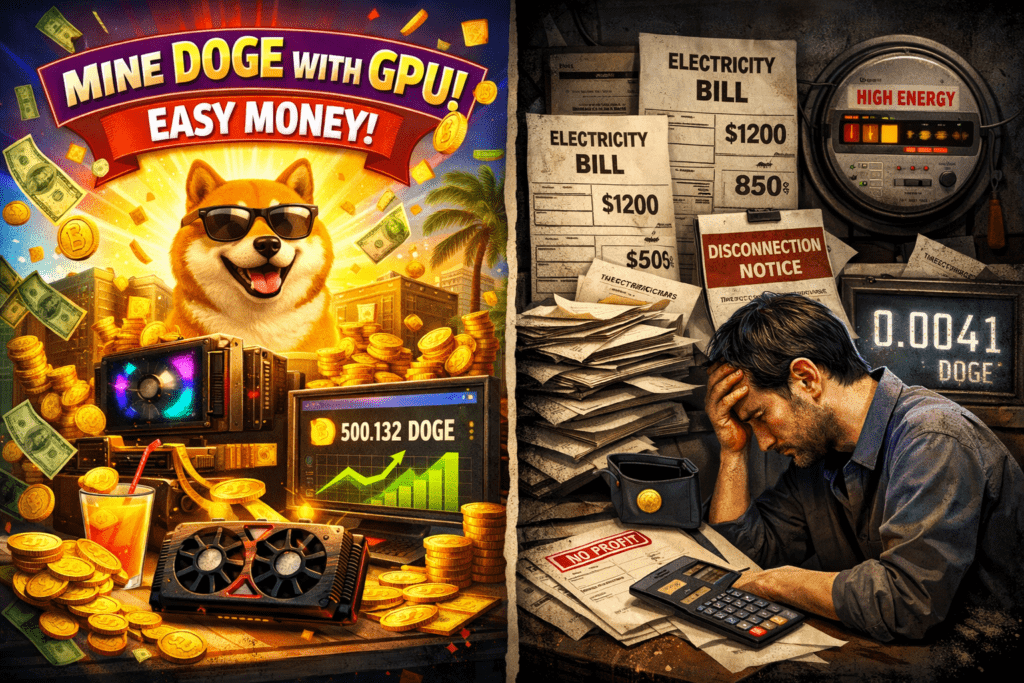
Dogecoin’s documentation explicitly states that profitable mining today requires specialized ASIC miners . Previously, a “gaming” PC with a powerful graphics card was sufficient, but the growth of the network’s overall hashrate has dramatically reduced the chances of finding a block solo. This has led to the emergence of pools , where thousands of miners combine their power and share the reward. Another important point: now “everyone who mines Dogecoin and other Scrypt coins profitably does so on ASIC hardware.” Graphics cards are more of an experiment: you can connect and “support the network,” but the profits will be almost nonexistent, and your electricity bills will be unpleasantly surprising.
BT Miners Article: GPU? Better Not
In the BT Miners FAQ blog, the question “Can I mine Dogecoin on a GPU?” reads like a warning. The authors note that mining DOGE on a GPU is not recommended, as ASIC miners offer incomparably higher efficiency. While it’s certainly worth a try, the end result will be minimal profits and huge electricity bills. An RTX 3080 graphics card may be a great choice for gaming and graphics, but it’s not suitable for Dogecoin mining. And for CPU mining, the situation is even worse: the processor simply won’t be able to handle the load, and energy costs will eat up all potential profits.
0xProcessing: A Different Perspective
Interestingly, the English-language 0xProcessing guide argues the opposite: for many, GPUs are a more practical and flexible choice. The authors believe that video cards provide acceptable hashrate without breaking the bank; plus, they’re easily scalable—you can add multiple cards and customize your mining setup. The recommended software list includes CGMiner, EasyMiner, and NiceHash. However, a careful reader will notice that this same guide also contains a warning: competition on the network has increased, solo mining is becoming pointless, and cloud services are often scams.
Bottom line
Comparing sources, it becomes clear: GPU mining of Dogecoin has become more of a hobby than a stable source of income . Yes, modern graphics cards can mine Scrypt coins, and some enthusiasts continue to do so, but the main stream of rewards goes to ASIC farm owners. If you have cheap electricity and a desire to experiment, a GPU farm can be a learning project. However, if you’re aiming for real profit, you’ll have to invest in specialized devices or use your hashrate on other algorithms and exchange the resulting cryptocurrency for DOGE.
How to start mining DOGE
Equipment and energy
Decided to give it a try? Then prepare your workspace. You’ll need a computer with internet access and one or more ASIC mining rigs for Scrypt coins. Keep in mind that these devices are noisy and hot, requiring a separate room with ventilation and cooling. Electricity is key. Articles on cool-mining.org emphasize that as tariffs rise, the profitability of PoW mining declines, leaving only farms with cheap energy remaining profitable.
For experimenters who have built a GPU rig, it’s important to optimize power and cooling. Practical guides on undervolting and overclocking video cards at cool-mining.org detail how to reduce power consumption and extend the life of your equipment. But remember: reducing voltage can reduce your hashrate, and therefore your profits.
Software and pools
Without the right software, you won’t see a single coin mined. Classic utilities like CGMiner , BFGMiner , and EasyMiner support both ASIC and GPU mining. NiceHash automatically selects the most profitable algorithms, which is convenient for inexperienced users. Pool selection is critical: the official Dogepedia recommends joining large pools that support merged mining with Litecoin. Pools take a small percentage of the reward, but offer regular payouts and reduced risk. When choosing a pool, read the rules and pay attention to fees.
Coin Storage Security
Mining is half the battle; the other half is saving your earnings. Electrum Dogecoin is a lightweight wallet that doesn’t require downloading the entire blockchain and is suitable for everyday use. The authors note that this wallet launches quickly, remains non-custodial (you keep the keys), and supports recovery via a seed phrase. However, there are some caveats: the wallet is a fork of the popular Electrum, not an official product of the Dogecoin foundation, so it’s important to download it only from trusted sources and verify signatures. For long-term storage of larger amounts, it’s better to choose hardware wallets (Ledger, Trezor); their reviews can also be found on crypto-wallets.org.
Cloud, pooled, and home: how to choose a method
Solo mining Dogecoin today is like playing the lottery. In theory, you receive the entire reward, but in practice, your device might not find a block for months. Pool mining divides the reward among all participants; payouts are smaller but more frequent. Most beginners start with pools. Cloud mining eliminates the need to purchase equipment, but it carries a high risk of scams, and fees can eat up a significant share of income. The market is developing, and hybrid models are emerging that combine mining with leasing computing power for AI tasks—as OSL writes, noting that GPU farms participate in the “leasing market” for computing power.
Conclusion: Mining as a Philosophy
Mining Dogecoin is more than just counting profits. It’s participating in a culture that began as memes but has evolved into a global community. The Scrypt algorithm, merged mining with Litecoin, the inflationary supply of 10,000 DOGE per block, and the battle between GPUs and ASICs—all these details make the history of DOGE fascinating.
Is it possible to mine Dogecoin on a GPU? Technically yes, but practically no : the network has long since switched to ASIC hardware, as confirmed by both the official Dogecoin documentation and independent reviews. However, the desire to experiment and participate in the life of a meme coin may outweigh dry economic logic. And no one has cancelled out the joy of participating in cryptocurrency culture—even if your GPU is only producing a fraction of the hashrate.
Read more:
 AwesomeMiner (Crack): Download CPU/GPU/ASIC/FPGA Miner for Windows/Linux
  The Best PoW Cryptocurrencies to Mine in 2026
  Mining Laws and Regulations in 2025: Russia, EU, and the US
  PhoenixMiner 5.1c: Download fastest Ethash miner with Low DevFee (Win/Linux)
  Electrum Doge: How to Download and Use. Comparison of MultiDoge and Dogecoin Core
  PhoenixMiner v5.0e: Download Ethereum (Ethash) GPU miner for Windows & Linux.
  Best Miner for Ravencoin (RVN): T-Rex, GMiner or NBMiner?