The Best PoW Cryptocurrencies to Mine in 2026 – From Bitcoin to Alephium: Algorithms, Profitability, and Forecasts. This article examines the most promising PoW coins for mining in 2026: Bitcoin, Litecoin, Monero, Zcash, Ravencoin, Vertcoin, Dash, Ethereum Classic, Dogecoin, Grin, Kaspa, and Alephium. It describes their algorithms, rewards, difficulty, industry trends, and tips for miners.
Introduction
Following Ethereum’s transition to Proof-of-Stake, interest in classic Proof-of-Work (PoW) has grown again. PoW remains the foundation of secure decentralized networks: miners perform calculations, confirm transactions, and receive rewards. Meanwhile, hardware and electricity are becoming increasingly expensive, and the market continues to evolve. Cryptocurrency blogs note that in 2026, PoW coins with efficient algorithms and stable demand will come to the fore: Bitcoin , Litecoin , Monero , Zcash , Ravencoin , Vertcoin , Dash , Ethereum Classic , Dogecoin , Grin , as well as new projects like Kaspa and Alephium . Let’s consider why these coins are promising for mining and what risks should be considered.
Why PoW mining is still relevant
Articles on portal emphasize that, despite the dominance of PoS networks, PoW remains in demand. The main reason is reliability and decentralization: miners secure blockchains and receive rewards. The author notes that merged mining (the simultaneous mining of multiple coins) is increasing interest in PoW: Namecoin and other projects using shared hashing are examples. New PoW startups are implementing ASIC-resistant algorithms targeting GPUs and CPUs to make mining accessible to a wider range of users.
blog also analyzes mining profitability in 2026. According to its data, profitability still depends on the coin’s price, network difficulty, and electricity costs. Bitcoin remains profitable when using the most efficient ASIC devices and cheap energy, while small home miners are forced to switch to ASIC-resistant altcoins like Monero or Ravencoin . Analysts note that competition is increasing: after the 2024 halving, the Bitcoin reward decreased to 3.125 BTC, and the total network hashrate exceeded 800 EH/s. Therefore, only farms with modern ASICs and favorable tariffs remain profitable.
GPU mining trends have shifted: after Ethereum’s transition to PoS, kHeavyHash (Kaspa) and Autolykos (Ergo) remain the most profitable algorithms. According to WhatToMine, an RTX 4090 graphics card generated approximately $2.9–$3.1 per day when mining Kaspa and $1.7 on Ergo at the end of 2025. However, the profitability of GPU mining rigs in 2026 is low: the payback period can take hundreds of days, and most of the income goes towards electricity costs. Therefore, choosing the right coin and hardware is critical.
Bitcoin (BTC) – the gold standard of mining
Bitcoin is the first and most liquid cryptocurrency. The block reward after the 2024 halving is 3.125 BTC, and network difficulty is growing exponentially. Profitable mining requires specialized ASIC devices and cheap electricity; many miners join pools to ensure stable payouts.
forecast , Bitcoin occupies a central position among PoW coins: analysts expect price growth, but acknowledge high competition and profitability dependent on energy prices. Despite its challenges, Bitcoin remains the most secure and popular network, and its liquidity and limited supply (21 million coins) support investor interest.
Litecoin (LTC) and Dogecoin (DOGE) are classic Scrypt coins
Litecoin uses the Scrypt algorithm and allows merged mining with Dogecoin, increasing efficiency. The block reward after the 2023 halving is 6.25 LTC, and the next halving is expected in the summer of 2027. Litecoin’s advantages include fast transactions (2.5 minutes) and low fees.
Dogecoin is a meme coin, but it can be mined alongside Litecoin because the networks share a common chain (merge mining). The reward is fixed at 10,000 DOGE per block, blocks are created every minute, and the network remains one of the most liquid PoW alternatives. According to , Dogecoin remains a popular asset thanks to its active community and celebrity endorsements; its price often correlates with Bitcoin’s performance.
Monero (XMR) – Privacy and ASIC Resistance
Monero is a leading privacy cryptocurrency using the RandomX algorithm. Created in 2014, it offers confidential transactions thanks to ring signatures and stealth addresses. Monero has a constant “tail emission”: the reward is 0.6 XMR per block and is not reduced by standard halvings.
The main advantages are the ability to mine on regular CPUs and GPUs without expensive ASICs, high anonymity, and a low entry threshold. However, profitability depends on electricity prices and the market: older equipment yields little profit. also notes that Monero remains a favorite coin among home miners due to its ASIC resistance.
Zcash (ZEC) – Private Transactions on Equihash
Zcash is a Bitcoin fork that supports zk-SNARKs for privacy. The block reward is 1.5625 ZEC, and the difficulty is medium. The coin supports GPU mining, but ASIC mining produces the highest profits. Zcash’s advantages include strong privacy and a stable market; its disadvantages include expensive miners, potential regulatory risks, and profitability dependent on electricity prices.
Ravencoin (RVN) – a tokenization platform
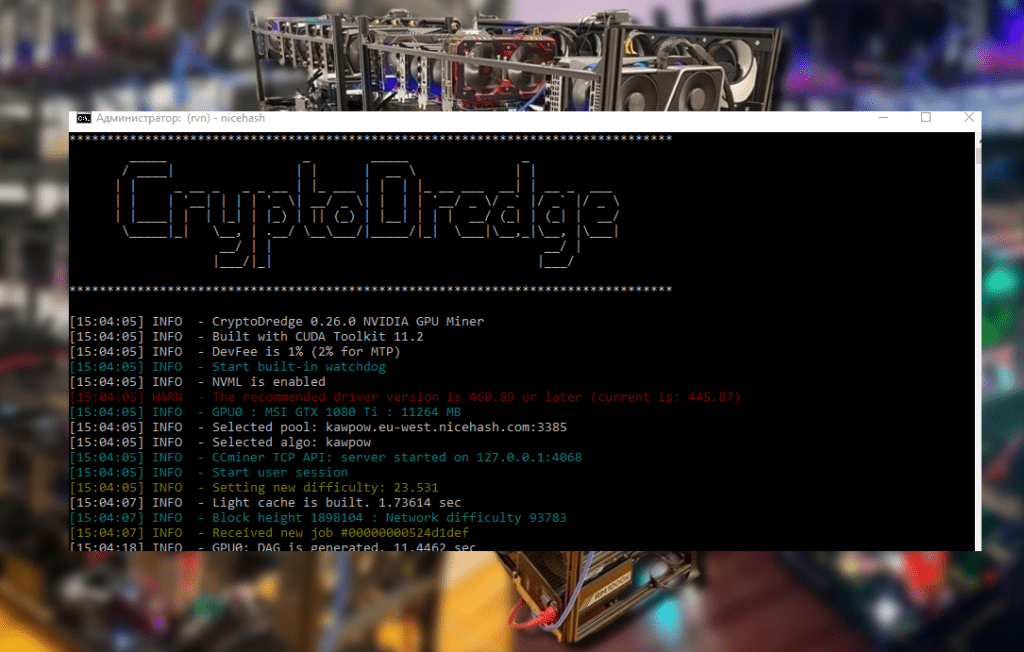
Ravencoin is designed for the creation and transfer of digital assets. It uses the KAWPOW algorithm, optimized for GPUs and resistant to ASICs. The reward is 2,500 RVN per block; the halving is expected in January 2026. Ravencoin’s advantages include its open-source code, active community, and fair distribution of hashrate. The main disadvantage is that profitability is highly dependent on electricity prices and competition from large mining farms.
blog mentions Ravencoin as one of the best ASIC-resistant altcoins for home miners. The site’s forecast predicts that Ravencoin will remain popular among GPU miners until 2026.
Vertcoin (VTC) – Mining for Everyone
Vertcoin is designed as a “coin for the people” and uses the ASIC-resistant Lyra2REv2 algorithm. The reward is 12.5 VTC per block (reduced in December 2025), and GPU mining is possible. Vertcoin’s advantages include a low entry barrier, energy efficiency, and an active community. Disadvantages include low liquidity and a relatively small market.
Dash (DASH) – Fast Transactions and DAO
Dash is positioned as a payment system with instant transactions. The block reward is approximately 2.3097 DASH, and the network is governed through a system of masternodes and a treasury. Its advantages include fast confirmations (1–2 seconds), DAO governance, and an active community; its disadvantages include the need for ASIC miners and the concentration of power in masternodes.
Ethereum Classic (ETC) – Ethereum’s legacy
After the 2016 hard fork, the Ethereum Classic network retained its PoW algorithm. CryptoNinjas notes that the Thanos upgrade in 2020 increased network security, and the block reward is 2,048 ETC; the reward decreases by 20% every 5 million blocks. The coin can be mined with GPUs, but ASIC miners increase profits. forecasts that ETC is one of the most popular PoW coins, although the network faces competition from PoS projects.
Grin (GRIN) is an experimental MimbleWimble
Grin implements the MimbleWimble protocol, which provides a high level of privacy and scalability. CryptoNinjas writes that the reward is constant—60 GRIN per block—and GPU mining is possible. Its advantages include complete anonymity, low entry barriers, and decentralization. Its disadvantages include low liquidity, increasing difficulty, and its experimental nature.
Kaspa (KAS) – Super-Fast BlockDAG
Kaspa stands out from other PoW projects. that it is the first fully scalable Layer-1 network built on blockDAG, a structure that allows for the creation of multiple blocks in parallel and instant transaction confirmation. The kHeavyHash algorithm ensures network security and supports up to 10 blocks per second (the target is 32 and 100 blocks). Kaspa launched on November 7, 2021, without a premine, with a maximum supply of approximately 28.7 billion coins.
The website notes that Kaspa has a very high block generation rate and supports both GPU and ASIC mining; its kHeavyHash algorithm is optimized for energy efficiency. The blog notes that Kaspa has become one of the most profitable GPU coins since the demise of Ethereum, generating approximately $3 per day on a high-end RTX 4090 graphics card. Therefore, analysts consider KAS one of the most promising coins for mining in 2026.
Alephium (ALPH) – Proof-of-Less-Work and Sharding
Alephium is a new Layer-1 blockchain that combines the UTXO model with BlockFlow (sharding) technology. An article on explains that Alephium uses PoW consensus combined with a Proof-of-Less-Work (PoLW) mechanism. A portion of the reward is burned, which reduces energy consumption and improves network security; miners earn 1.25 ALPH while burning 0.85 ALPH for energy efficiency.
Network upgrades are increasing throughput: the Rhône upgrade (summer 2024) reduced the block interval from 64 to 16 seconds, introducing a new address type for PoLW; the Danube fork (July 15, 2025) reduced the blocktime to 8 seconds and introduced “tail emission,” making coin production more sustainable and incentivizing miners. A gradual difficulty adjustment and new developer tools are planned for 2026. rates Alephium as a highly promising project due to its energy-efficient Blake3 algorithm and scalable architecture.
Other interesting PoW startups
analysts have compiled a list of promising PoW startups for 2025–2026, including Nexa , Phicoin , Dynex , Microvision Chain , and Neurai . Nexa uses the energy-efficient NexaPoW algorithm, Phicoin uses the unique ASIC-resistant PhiHash algorithm, Dynex is a neuromorphic blockchain with Proof-of-Useful-Work, Microvision Chain is a scalable second-layer PoW network for Bitcoin, and Neurai combines AI algorithms and IoT. These projects are in their early stages, so mining carries risks: high volatility, competition, and a long payback period, but the potential for significant profitability at the outset.
How to choose a coin and equipment
Choosing a coin for mining in 2026 depends on your budget, equipment type, electricity price, and goals. Advice from cool-mining.org emphasizes that 70–80% of success depends on the right software and hardware. For beginners, services like NiceHash or Kryptex, which automatically select the most profitable coin, are suitable; experienced miners use T-Rex Miner, NBMiner (NVIDIA), lolMiner (AMD), and Braiins OS+ for ASICs.
Before starting mining, it’s worth calculating profitability, taking into account the cost of equipment, the payback period, and the network’s complexity. When choosing a coin, it’s important to consider:
- Algorithm and hardware : ASIC coins (Bitcoin, Litecoin, Dash) require expensive hardware; CPU/GPU coins (Monero, Ravencoin, Kaspa, Alephium) are accessible to home miners.
- Emission and halvings : Frequent reward reductions reduce profitability (Bitcoin, Litecoin), while Monero and Grin have constant payouts.
- Liquidity and demand : coins with high liquidity (BTC, LTC, DOGE) are easier to sell; new projects can generate high returns, but the risk of price decline is higher.
- Energy consumption : projects that reduce energy costs (Kaspa, Alephium) and support merged mining are becoming more attractive.
Conclusion
In 2026, the mining market is undergoing a transformation. Classic coins— Bitcoin , Litecoin/Dogecoin , Monero , Zcash , Ravencoin , Vertcoin , Dash , Ethereum Classic , and Grin —retain their status as proven assets. New stars— Kaspa and Alephium —attract with fast block times, energy-efficient algorithms, and active development. Expert articles on , , , and help miners navigate this diversity by analyzing algorithms, forecasts, and profitability. Choosing a coin should consider technical specifications, energy costs, liquidity, and long-term prospects. This comprehensive approach will maximize the benefits of PoW mining in the rapidly changing cryptocurrency world.
Read more:
 Mining Laws and Regulations in 2025: Russia, EU, and the US
  AwesomeMiner (Crack): Download CPU/GPU/ASIC/FPGA Miner for Windows/Linux
  Kaspa (KAS): Mining Prospects and Profitability in 2025-2026
  How to reduce mining rig energy consumption, increase ROI and efficiency
  Mining Ethereum in on GPU and ASIC
  PhoenixMiner 5.1c: Download fastest Ethash miner with Low DevFee (Win/Linux)
  PhoenixMiner v5.0e: Download Ethereum (Ethash) GPU miner for Windows & Linux.