A detailed expert review of Kaspa (KAS) mining – what this PoW currency is, its technologies (blockDAG, kHeavyHash), profitability, and ecosystem prospects. Find out whether KAS mining is worth it, considering the profitability and risks.

❓ What is Kaspa (KAS) and the DAG blockchain?
Kaspa is a new open-source cryptocurrency launched in late 2021 without a presale or premine . Its uniqueness lies in its use of blockDAG technology instead of a traditional blockchain : the GHOSTDAG/PHANTOM protocol allows for the construction of multiple parallel branches of blocks and the processing of blocks every second. This ensures incredible network speed and scalability – Kaspa is considered the fastest PoW network to date, with transaction confirmations available almost instantly.
- Kaspa blocks a new block every second “one second”.
- The mining algorithm is kHeavyHash , an energy-efficient algorithm based on HeavyHash , optimized for modern hardware.
- Completely decentralized: the project is supported by the community without a central authority or ICO.
💰 Kaspa Mining Profitability: Is It Possible to Make Money?
Kaspa mining is interesting because, after Ethereum’s transition to PoS, many miners sought an alternative. Experts believe that Kaspa mining will remain economically viable in 2025-2026 with the right approach. Under favorable conditions (cheap electricity, efficient equipment, and profitable mining pools), high profitability can be expected. For example, analysts at Crazy-Mining.org note that Kaspa is aimed at GPU miners (the kHeavyHash algorithm for video cards), and with the right hardware, the payback period could be as little as 8-12 months .
However, there are important risks:
- Issuance and rewards. The Kaspa block reward decreases by ~5.94% every month. This means that mining coins becomes more difficult over time, and profits decrease. It is recommended to “lock in” (sell) a portion of mined KAS as the price rises.
- Difficulty Rising. The Kaspa network’s hashrate is constantly growing, making mining more difficult. Solo mining is now almost irrelevant – miners are joining pools for a stable income.
- Equipment cost. Specialized ASIC/FPGA miners for Kaspa exist (for example, the IceRiver KS5 Pro, an FPGA miner), but they are very expensive and designed only for kHeavyHash. According to Cool-Mining.org, purchasing such an ASIC recorder is often unprofitable due to its limited application (it cannot mine other coins), so it is sometimes more cost-effective to purchase the Kaspa hardware itself.
- Energy costs and prices. When electricity prices are high, profitability declines. The optimal scenario is inexpensive “green” power (solar/wind sources).
Success factors: Mining profitability depends on the KAS exchange price, the energy efficiency of the equipment, and the selected mining pool. According to MiningStore, Kaspa remains a highly profitable cryptocurrency with proper setup: a modern ASIC (e.g., Bitmain KS5 Pro), low electricity costs, and a reliable mining pool significantly increase profits.
🔧 Kaspa mining technology and equipment
Kaspa uses the kHeavyHash/HeavyHash algorithm , which is based on the core algorithm but optimized for efficient GPU operation. This means that modern graphics cards can successfully mine KAS, although they are less energy efficient than ASICs.
- GPU mining. The most popular GPUs are NVIDIA GeForce (RTX 30 series) and AMD Radeon (RX 6000). For example, the RTX 3090 produces around 1000 MH/s at ~300-350 W, while the RX 6800 XT produces ~850 MH/s.
- ASIC/FPGA. There are specialized devices (IceRiver KS5 Pro, Blackminer F1/F2 series FPGA). They provide enormous hashrate (hundreds of GH/s), but are designed exclusively for Kaspa. Cool-Mining.org warns that purchasing such an ASIC is a significant risk, as the algorithm is unique to Kaspa, and blocks are constantly deflationary.
Examples of Kaspa mining software: There are popular miners that support kHeavyHash. For example:
- GMiner 3.21 (allows you to mine Kaspa in dual mining mode with Zilliqa).
- lolMiner 1.64 (supports dual/triple mining of Kaspa + Ethereum Classic + Zilliqa).
- RigelMiner 1.3.4 (targets Nvidia cards and supports Kaspa and ZIL).
There are also , TeamRedMiner , and others – all optimized for kHeavyHash. The choice of software depends on the platform: different versions are available for Linux and Windows, often with different mining modes.
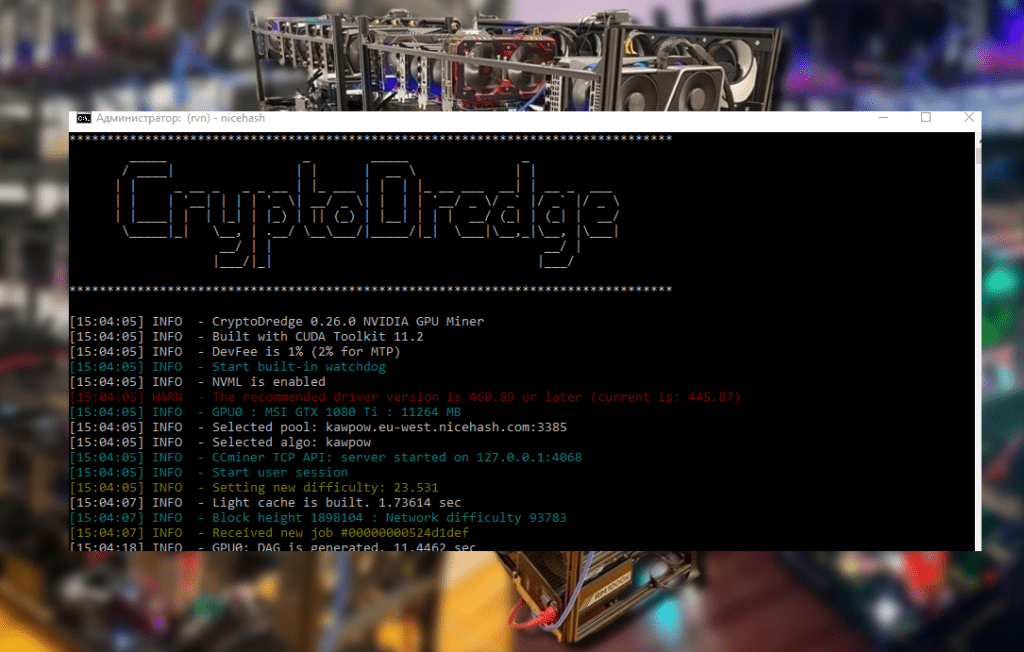
How do I start mining Kaspa? You’ll need a graphics card (Nvidia/AMD) or, if available, an ASIC. Install a miner that supports Kaspa, specify a pool for Kaspa, and select your wallet. By default, earnings are transferred to your Kaspa address—make sure you have your wallet ready for this. recommends selling some of your mined coins as the price rises rather than hoarding all your mined coins in anticipation of further growth. Dual mining with Ethereum Classic is also possible: mine ETC and Kaspa on the same card to increase profits.
🌱 Kaspa Ecosystem Prospects
The Kaspa ecosystem is actively developing. The project is fully decentralized: developers work through open communities, and updates occur without “centralized governance.” The team plans major upgrades in 2025–2026. According to Kaspa Lead Developer Michael Sutton, plans include an update to the Dagknight protocol (accelerating GHOSTDAG consensus) and support for ZK rollups (enabling smart contracts). These innovations could strengthen the network and expand its applications (decentralized applications, oracles, DeFi).
Given current developments, Kaspa has growth potential . On the one hand, Crypto-Mining.Blog’s analysis indicates rapid technological development for Kaspa (it is one of the fastest PoW blockchains). On the other hand, Kaspa remains a relatively small-cap coin, and its price is highly volatile. Many experts recommend carefully assessing risks and avoiding investing funds that are absolutely necessary. However, if the network develops successfully and demand for fast PoW networks grows, Kaspa could attract the attention of large investors.
Advice for beginners: Before starting mining, analyze the cost of equipment, energy consumption, and the current price of KAS. It’s worth joining Kaspa communities (forums, social media) to stay up-to-date on updates (new wallet versions, software patches, miner launch announcements). Install the official Kaspa wallets (web, desktop, and mobile versions available) – they are protected by 2FA and multi-signature. Crypto-Mining.Blog notes that the Kaspa wallet is simple and secure, which is important for beginners.
Conclusion
Mining Kaspa (KAS) in 2025–2026 could be a profitable strategy , especially for participants with access to cheap electricity and modern equipment. Kaspa’s technological foundation (blockDAG, kHeavyHash) makes the network unique and fast, and upcoming updates are aimed at further strengthening the project. However, risks remain: increasing difficulty, deflationary emission, and price volatility could reduce real profits. Therefore, beginners should approach Kaspa mining with preparation: study payback calculators, choose the optimal software, join a pool, and regularly lock in profits.
Main sources of information:
- Crazy-Mining.org article ” ” (about Kaspa as a promising PoW coin).
- Crypto-Mining.Blog’s guide ” ?” (technical description and tips for Kaspa miners).
- Cool-Mining.org Review: ” There are more and more FPGA and ASIC miners for Kaspa KAS ” (analysis of FPGA/ASIC equipment and the risks of investing in it).
- Additional information was obtained from publicly available resources about Kaspa and mining technologies.
Read more:
 Mining Laws and Regulations in 2025: Russia, EU, and the US
  ASIC Mining in 2026: What’s More Profitable to Mine and How to Increase Profits
  The Best PoW Cryptocurrencies to Mine in 2026
  How to reduce mining rig energy consumption, increase ROI and efficiency
  How to set up GMiner for Kaspa mining using the kHeavyHash algorithm
  AwesomeMiner (Crack): Download CPU/GPU/ASIC/FPGA Miner for Windows/Linux
  How to Mine RAPTOREUM: Download RTM Wallet and CPU Miners